Material Synthesis
Representative Manufacturing Processes
Our company has two main synthesis processes: inorganic synthesis for ceramics and halides, and organic synthesis for alkoxides and metal amides. We have specialized staff for each process.

Combination Technology and Material Customization

- Please feel free to contact us.
-
We offer material customization combining our available processes and contract synthesis services.
We create original materials by combining various technologies to support your research and development activities.
We also provide analytical evaluation, material analysis, and consultations with specialized staff.
Case Examples
- Synthesis, pulverization, and subdivision/filling of sulfides and halides that are highly prone to decomposition or moisture absorption due to atmospheric humidity or other factors.
- Increasing the purity of materials
- Tableting and target fabrication of contract-synthesized powder materials
- Development of sol-gel materials with original compositions
- Synthesis from literature research and process development for new substances
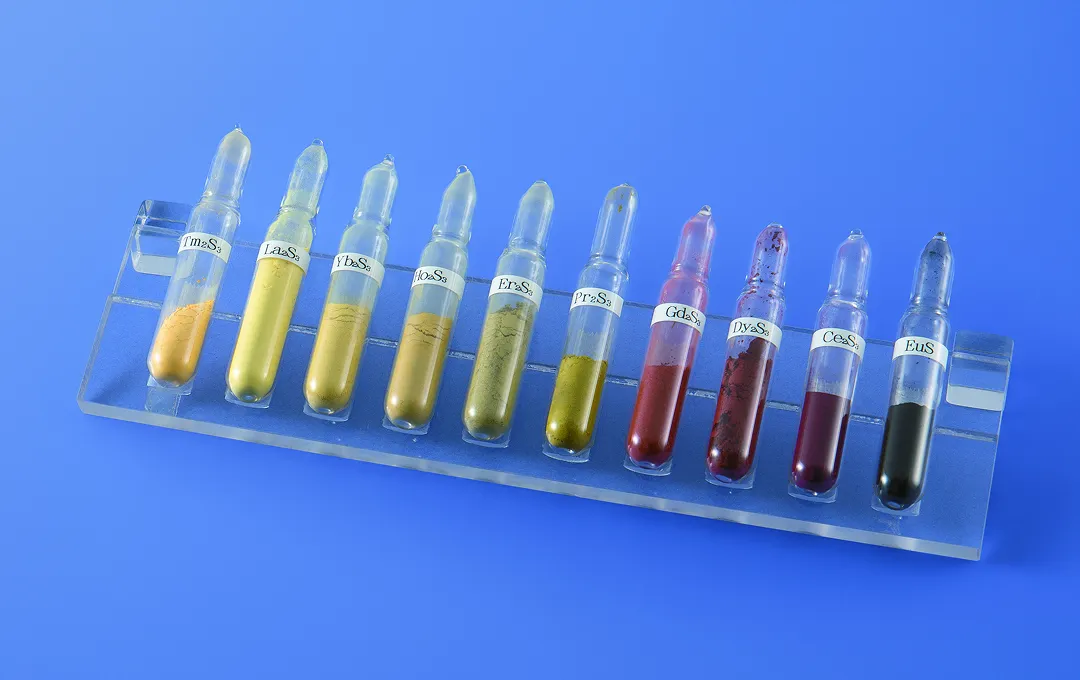
Inorganic Synthesis Technology
For many years, we have been engaged in the development and manufacture of a wide variety of inorganic compounds. We specialize in processes such as conventional solid-state reactions and wet-chemical reactions conducted in solvents. Furthermore, we are capable of handling highly reactive substances—which are prone to reacting with atmospheric moisture or oxygen—under an inert gas atmosphere without causing decomposition.
Major Manufacturing Equipment
- Tubular electric furnace
- Siliconit electric furnace
- Atmosphere furnace
- Lab-scale rotary furnace
- Vacuum glove box
Complex oxides are a type of fine ceramic material that exhibit unique properties when made into sintered bodies or thin films through chemically adjusted compositions tailored to specific characteristics and well-controlled firing conditions.
We can consult on supplying high-purity powders such as BST and PZT, prototype research for lithium battery all-solid-state materials, and homogeneously doped products using solid-phase and liquid-phase methods. We also have extensive experience in inorganic synthesis using reactive gases such as H2S and NH3.
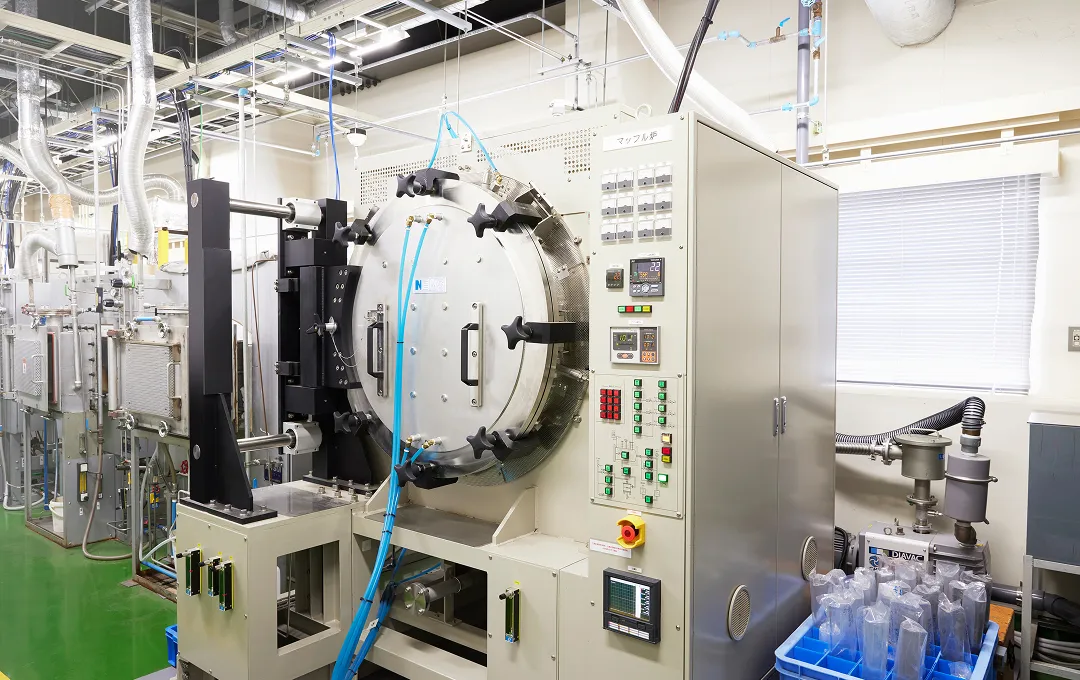
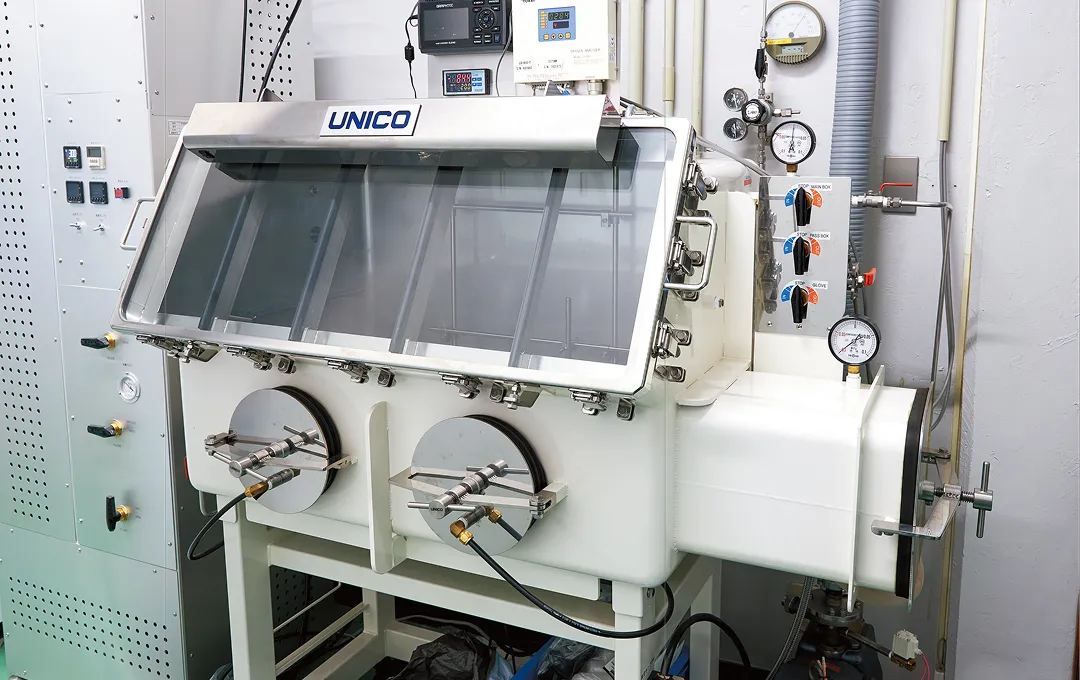
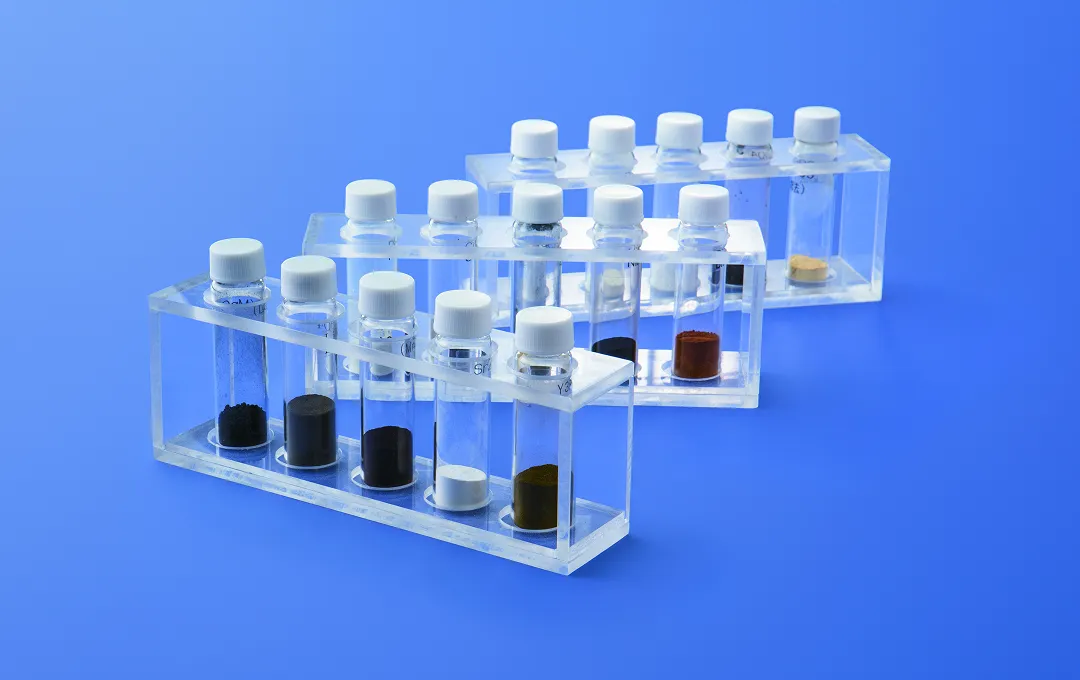
We have equipment capable of both dry and wet synthesis.
We also have glove boxes for handling materials under inert gas atmospheres, and we accept contract synthesis services using this equipment.
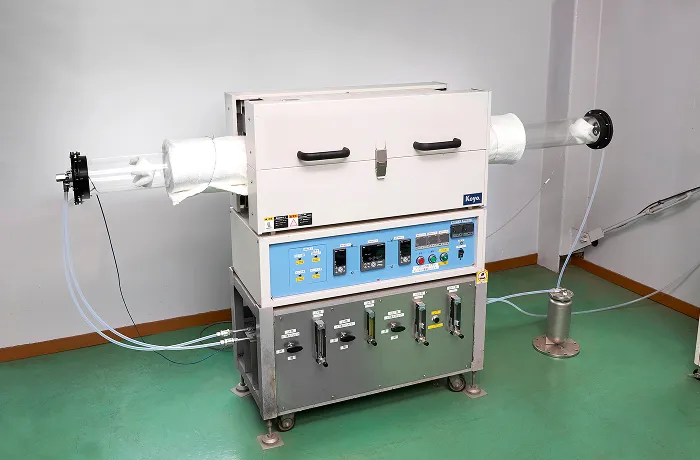
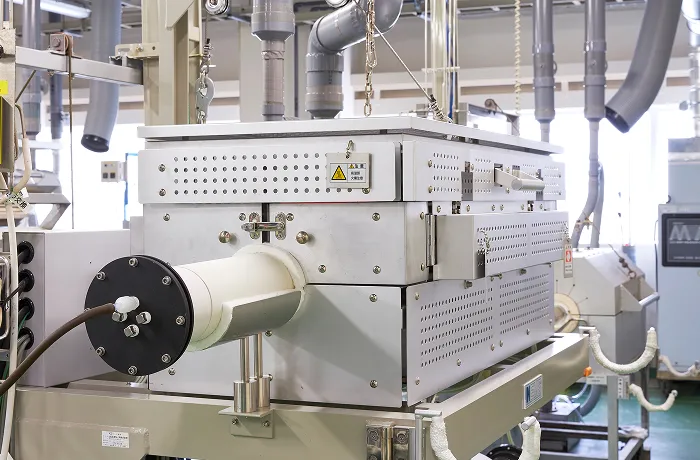
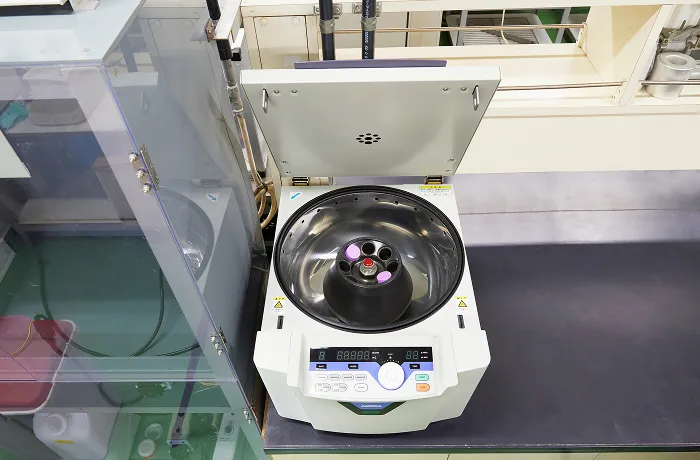
| Heat treatment equipment | Tubular electric furnace | High-temperature tubular electric furnace | Oxygen atmosphere electric furnace | Atmosphere furnace |
|---|---|---|---|---|
| Air atmosphere furnace | Room temperature to 1,000℃ | Reactive gas, N₂, Ar, Air | 2L | 12 |
| Air atmosphere high-temperature firing furnace | Room temperature to 1,500℃ | N₂, Ar, Air | 2L | 1 |
| Oxygen atmosphere electric furnace | Room temperature to 1,000℃ | Pure O₂, N₂, Ar, Air | 2L | 1 |
| Atmosphere furnace | Room temperature to 1,000℃ | N₂, Air | 15L | 3 |
| Air atmosphere furnace | Room temperature to 1,350℃ | Air | 5L | 4 |
| Air atmosphere high-temperature firing furnace | Room temperature to 1,700℃ | Air | 1L | 1 |
※Reactant gases: H₂, NH₃, H₂S, CO₂, O₂, etc.
Examples of Differences in Powder Morphology by Various Manufacturing Methods
We accommodate customer needs with methods ranging from simple solid-phase reaction methods to co-precipitation and hydrothermal synthesis for fine powder production and unique performance characteristics.
Various Manufacturing Methods and SEM Examples of BaTiO₃
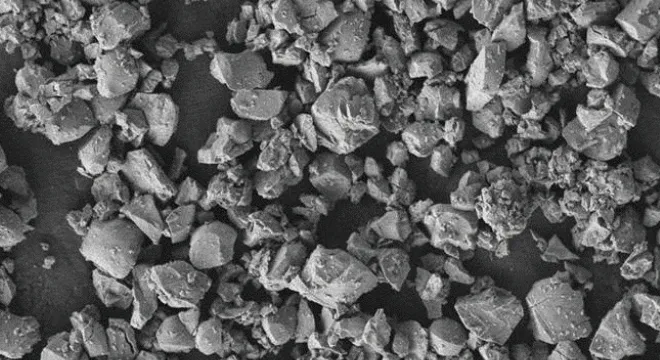
Solid-state reaction
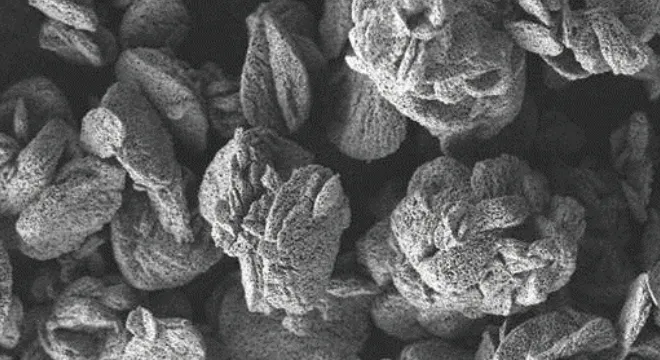
Co-precipitation method
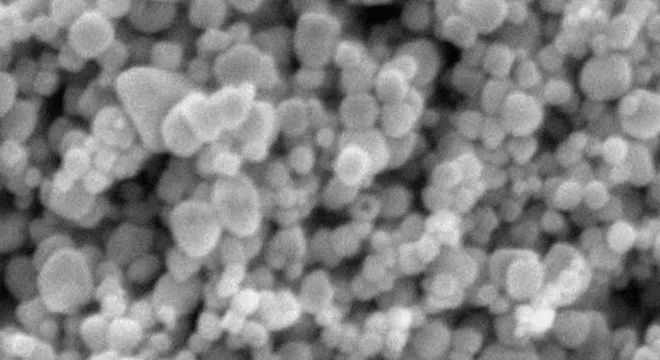
Hydrothermal synthesis
Milling and Processing
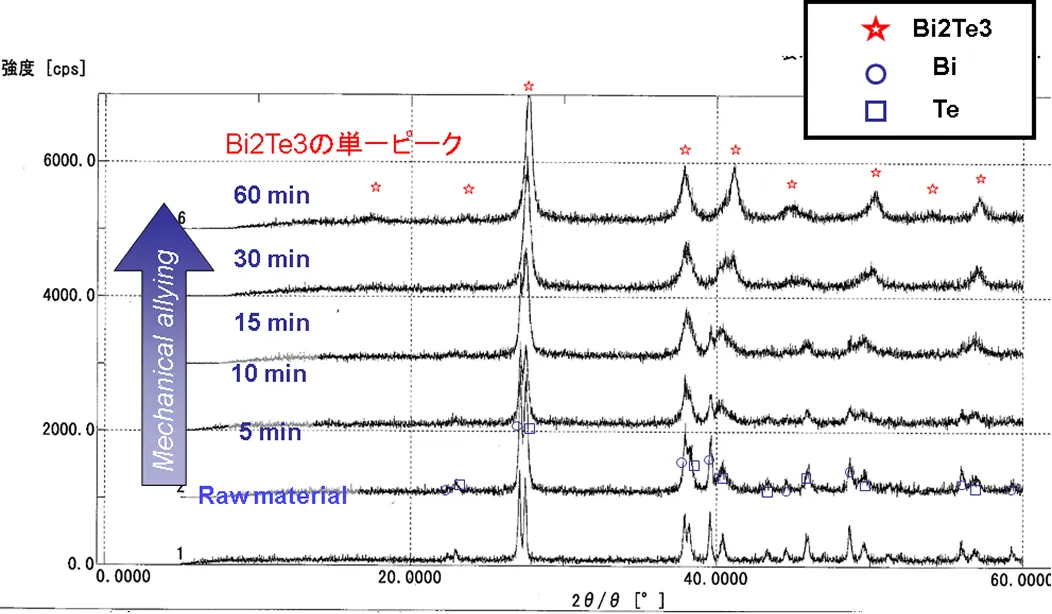
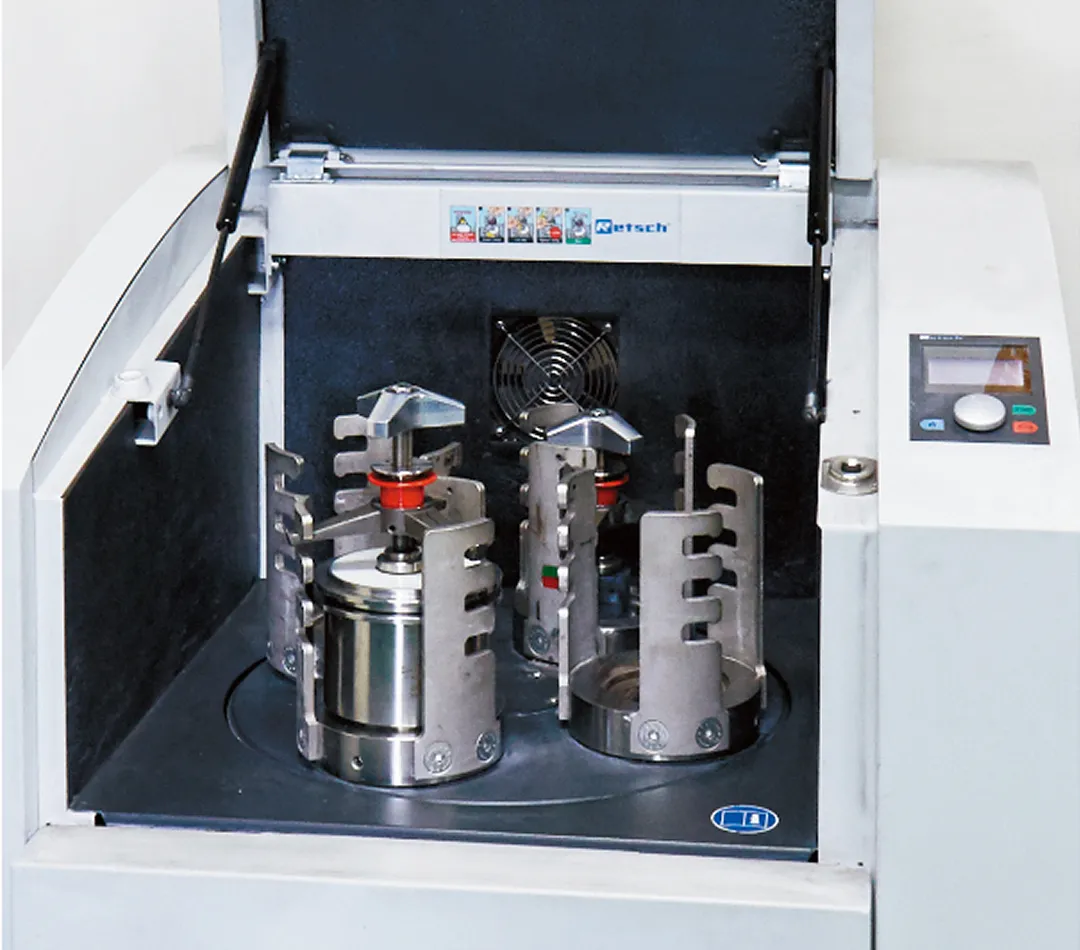
We perform simple crushing as well as particle size adjustment. We also support mechanical alloying methods that cause powder particles to collide and react with each other.
Main Processing Equipment
- Stamp mill
- Ball mill
- Planetary ball mill
- Braun crusher
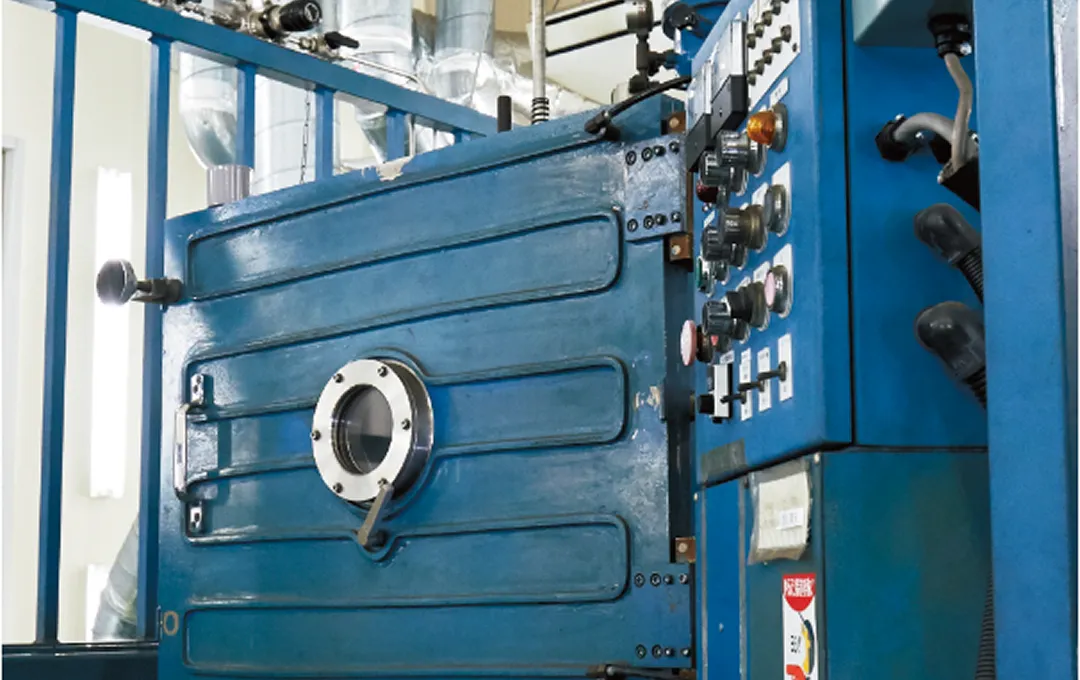
- Gas atomization apparatus
- Wet bead mill
Milling Processing Using Ball Mills, etc.
It is finely pulverized through friction and impact.
Synthesis of Bi₂Te₃ by Mechanical Alloying Method
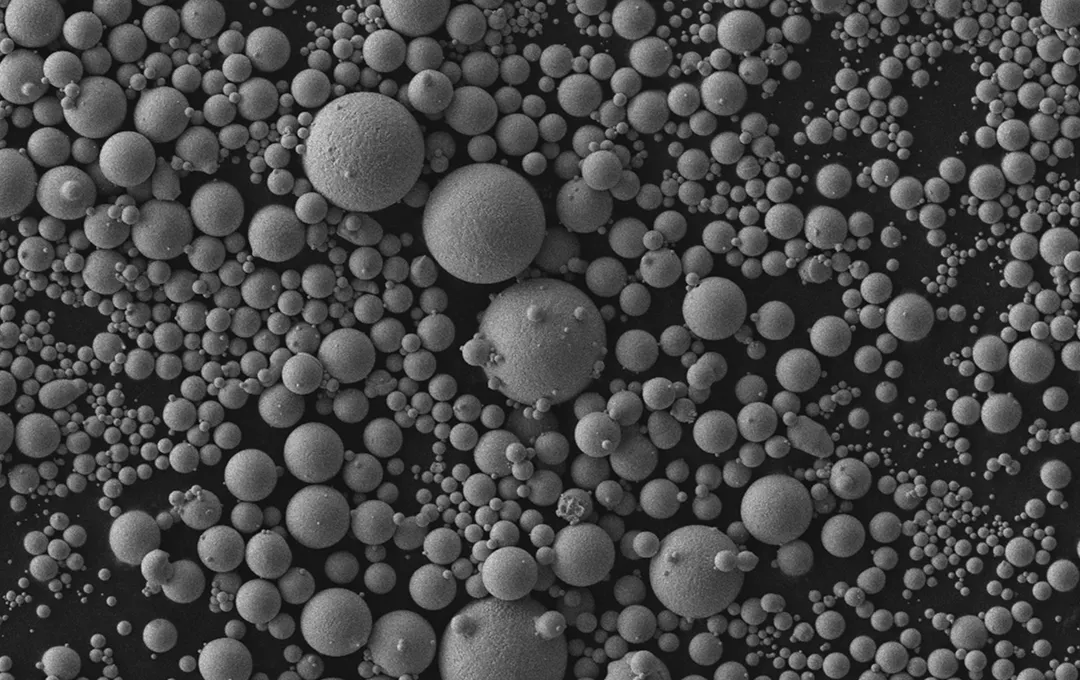
Atomization Processing
Molten metal is sprayed with high-pressure gas to produce powder. By using inert gas, high-quality spherical powder with minimal surface oxidation can be produced.