
Sintering Equipment
Sintering Method
Sintering is a technique that heats and compacts powders such as metals and oxides at high temperatures to create dense objects.
Our company manufactures ceramics using five sintering technologies: atmospheric sintering, hot press (HP) sintering, pressure sintering, spark plasma sintering (SPS), and hot isostatic pressing (HIP) sintering. Furthermore, we are equipped not only to produce general fine ceramics with high density and high quality, but also to synthesize and prepare various raw material powders, enabling us to meet demands for special ceramics that have no track record in the market.
Our company possesses various sintering equipment to manufacture materials according to your requirements.
We handle highly reactive compounds that are difficult to process in air and materials that are difficult to process with conventional sintering methods, and we propose optimal sintering methods and products by combining our extensive raw material synthesis technology with crushing and granulation technology.

Forming
In the sintering process, raw material powders with a purity of 99.9% to 99.999% are typically used.Oxide sputtering targets and tablets are mainly manufactured by atmospheric sintering.
10000 kN Powder Forming Machine
This is a device that fills powder into a specified mold and performs uniaxial forming.
By adopting a 3-cylinder system, pressure control is possible over a wide range from 100 to 10000 kN.
Precision hydraulic control can suppress the effects of springback, and program control enables highly repeatable forming operations.
Characteristics
- Precision hydraulic control can suppress springback.
- Program control enables highly repeatable forming operations.
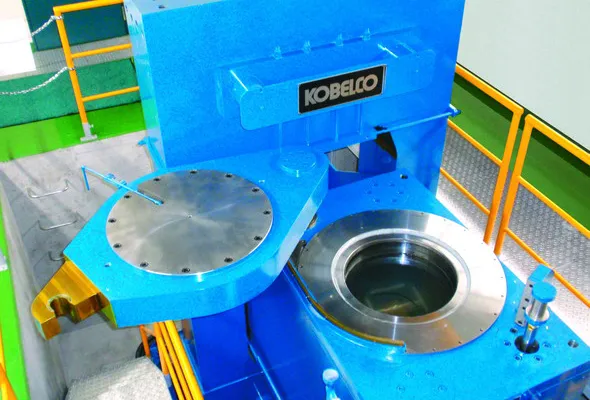
Cold Isostatic Press (CIP Equipment)
This is a device that performs forming by isostatic pressure within a cylinder.
Because high-pressure forming is performed, compacts with minimal density variation can be obtained even in large sizes.
A wide range of applications is possible, from small-lot to mass production, and from small to large products.
- Processing is possible up to approximately φ500 mm × L1000 mm.
- Pressurization up to a maximum of 200 MPa (2040 kgf/cm²) is possible.
Characteristics
- Unlike die forming, there is no friction with metal, and because pressure acts isotropically, compacts with uniform density and minimal directionality can be obtained.
- The depressurization process allows optimal conditions to be set through primary depressurization by valve and program-controlled secondary depressurization (to prevent cracking due to springback).
Sintering
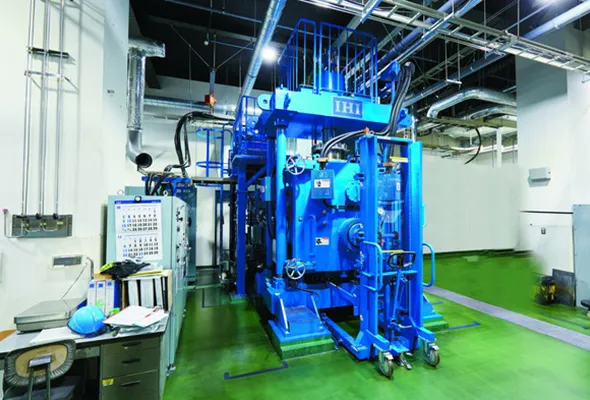
Vacuum Hot Press
Vacuum hot pressing is one of the pressure sintering methods.
This is a device that fills powder into a carbon mold and performs sintering by simultaneously applying heat and pressure.
In the initial heating stage, degassing is performed in a vacuum, followed by sintering in an inert gas atmosphere.
Characteristics
- Since degassing is performed in a vacuum during the initial heating stage, followed by sintering in an inert gas, metal oxidation can be prevented.
- This sintering equipment offers excellent reproducibility through program control.
Main Products
- Easily oxidizable metals such as W-based, Mo-based, Nb-based, V-based, and Ta-based
- Oxygen-deficient oxides such as TiOx, NbOx, etc.
Spark Plasma Sintering (SPS)
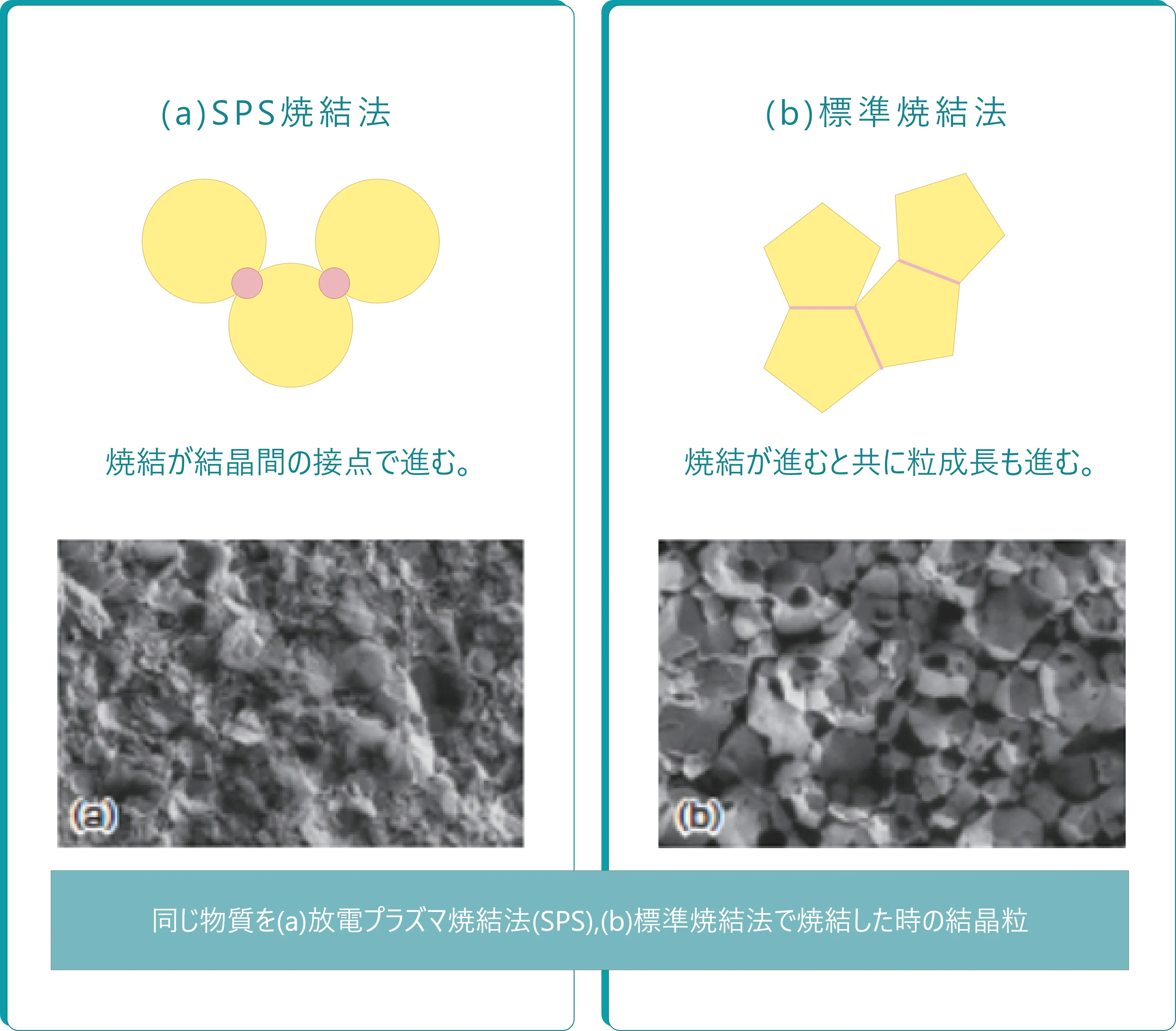
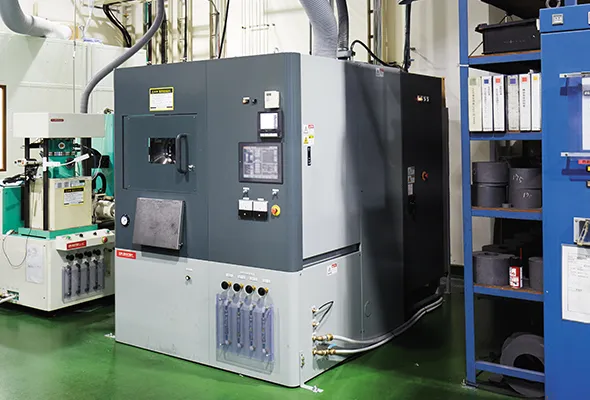
Spark Plasma Sintering (SPS) is a pressure sintering method that uses pulsed electrical current. By utilizing self-heating of the workpiece through pulsed electrical current and discharge plasma energy generated between particles, rapid and dense sintering is achieved in a short time.
Easy sintering of difficult-to-sinter materials and joining of difficult-to-join materials
- Sintering without binder (sintering aids) (AlN, TiN, W-Ti, Si₃N₄, etc.)
- Sintering of composite materials and multi-component materials (oxide + metal, nitride + metal, etc.)
Grain boundary control and suppression of grain growth
- Sintering of nanostructured materials
- Application to porous materials
Sintering Examples
-
Bonded Sintered Bodies
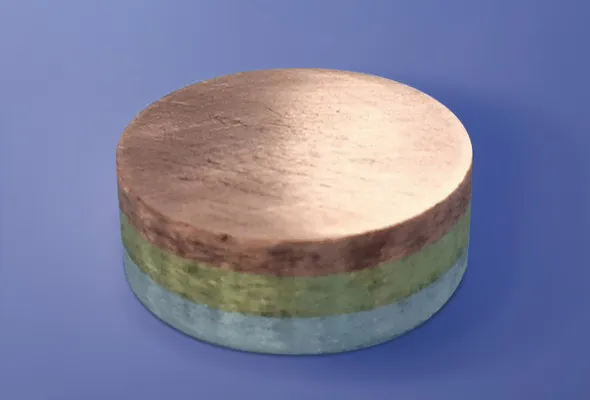
Since SPS can create temperature gradients within the same mold, sintering of functionally graded materials is also actively performed.
-
Difficult-to-Sinter Materials / Easily Decomposable Substances
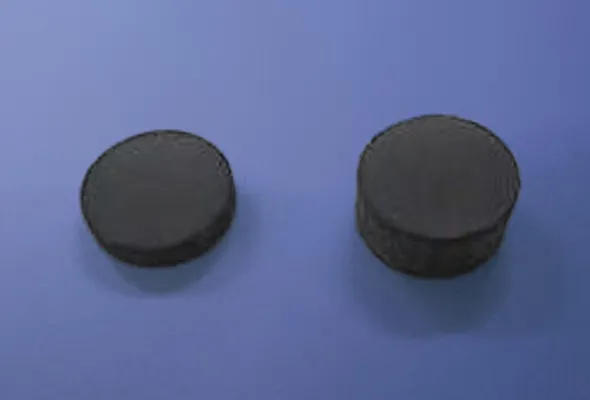
Even materials that are difficult to densify through sintering or materials where thermal decomposition at high temperatures is a concern, can be sintered without structural degradation using SPS.
Related Equipment
- Hot Press
- Vacuum/Pressure Sintering Furnace
- Atmosphere sintering furnace (N2, Ar, H2)
- HIP
Download Contract Sintering Brochure
Large Atmospheric Sintering Furnace
This is an electric furnace for sintering in an atmospheric environment, capable of heating up to a maximum temperature of 1700°C.
Items up to 500 mm square can be accommodated in the furnace, enabling the production of large ceramic products and mass production.
Characteristics
- This is an electric furnace mainly designed for the synthesis and sintering of complex oxides.
- Multiple pieces can be sintered at once.
Main Products
Oxides such as TiO₂, ZnO, MgO, SrTiO₃, LiCoO₂, PZT, and LiF, Ca₁₀(PO₄)₆(OH)₂, etc.
In addition to products, we also provide contract sintering services using sintering technology.
We will respond with the optimal sintering method according to your desired sintered body size, raw material properties, quantity, and other requirements.
An inquiry form is also available on the download page.Please feel free to contact us.